Research effects
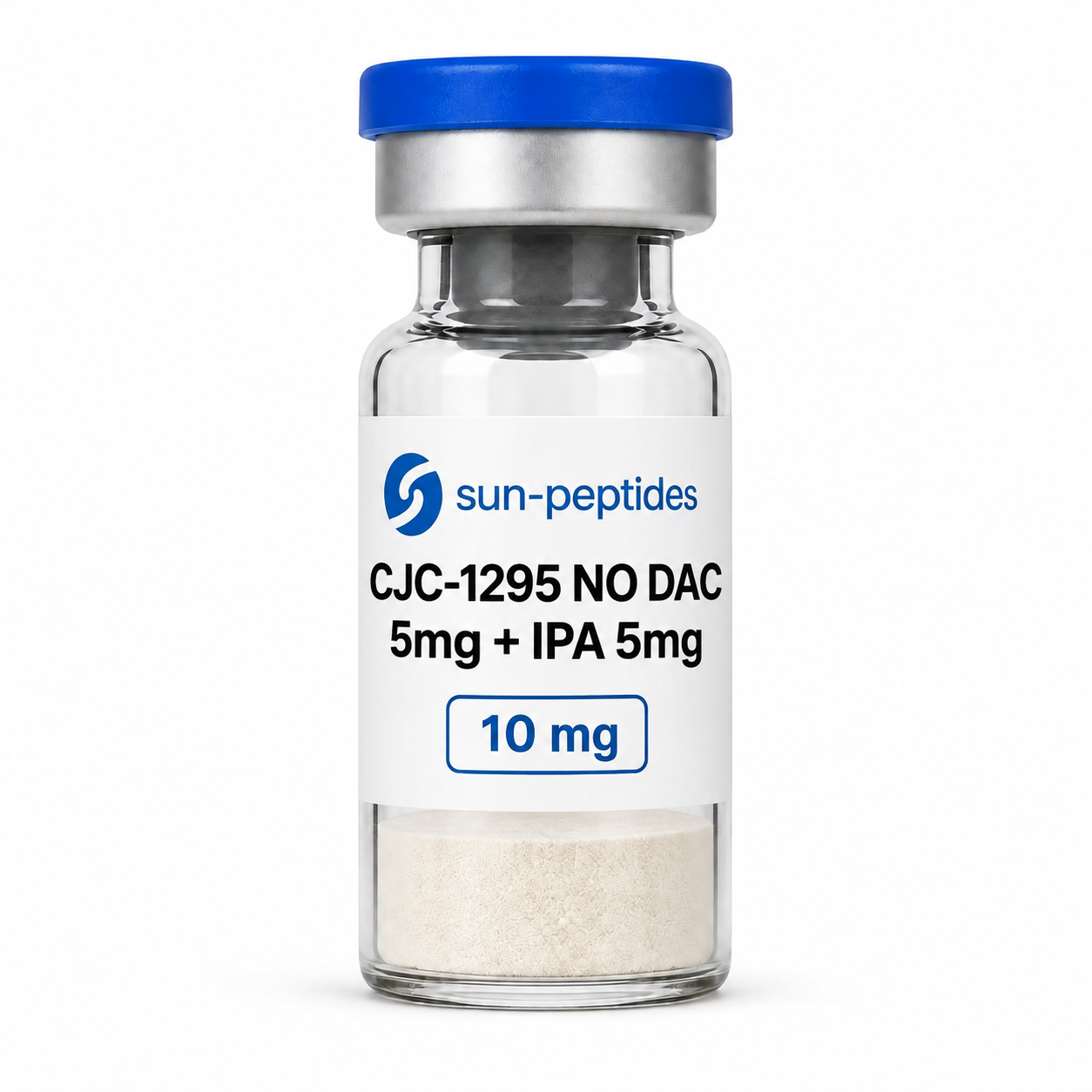
The combination of CJC-1295 NO DAC (Mod GRF 1-29) and Ipamorelin (IPA) represents a well-established synergistic regimen among growth hormone secretagogues. This dual-targeted approach aims to stimulate endogenous growth hormone (GH) pulsatile release through complementary pathways, achieving more pronounced anabolic effects than either compound alone.
Efficacy
Users commonly report enhanced muscle strength and endurance, reduced body fat (particularly visceral fat), improved sleep quality, enhanced skin elasticity, and accelerated recovery following surgery or training. A notable advantage of this combination is its ability to generate a "physiological" GH pulse pattern while exerting minimal impact on stress hormones including prolactin and cortisol, making it a relatively mild and sustainable pro-anabolic strategy, particularly suitable for individuals seeking body composition improvement, anti-aging benefits, and tissue repair support.
Research mechanism
These two agents act on distinct nodes of pituitary growth hormone secretion regulation, producing a synergistic effect. CJC-1295 NO DAC, as a GHRH analogue, binds to and activates the GHRH receptor on the anterior pituitary, stimulating the cAMP/PKA signaling pathway to promote GH synthesis and release. Its modified amino acid sequence confers resistance to protease degradation, prolonging its in vivo activity. Ipamorelin, as a growth hormone secretagogue receptor (GHS-R) agonist, mimics ghrelin's action and provides complementary stimulation to the GHRH pathway. When combined, GHRH and GHS-R signaling form a "dual drive" at the pituitary level, significantly amplifying GH pulse amplitude. Notably, both compounds exhibit high selectivity, producing virtually no significant elevation of prolactin or cortisol at effective doses, rendering the secretory response "cleaner" and more closely resembling physiological GH secretion patterns induced by feeding and sleep. Furthermore, the short half-life of the NO DAC version ensures GH release occurs in pulses rather than sustained plateau-like elevations, helping maintain IGF-1 levels within an optimal range and reducing potential insulin resistance risk.